How to Build a Soccer Training Session Plan (Free Template)
21 Sept 2026 • 7 mins read
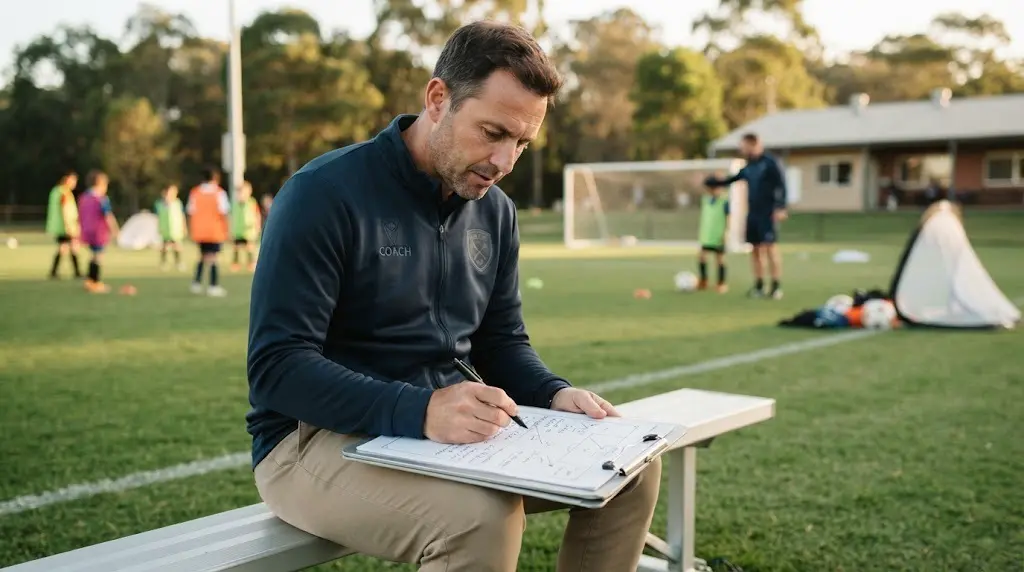
The gap between a training session that feels sharp and one that feels like fifteen kids running around aimlessly usually comes down to five minutes of planning the coach didn't do beforehand. Not because the coach doesn't care, but because there's never been a simple structure to plan against, so it gets skipped in favor of winging it on the walk to the pitch.
This is a template you can actually reuse every week, not a theory lesson on periodization. Copy the structure, fill it in before each session, and you'll notice the difference in how focused training feels within a couple of weeks.
Why a written plan matters more than it seems
A plan isn't there to make you look organized to parents on the sideline. It exists so you stop making decisions live, on the spot, in front of fifteen distracted kids. Coaches without a soccer training planner tend to default to whatever drill they remember best, run it too long because they haven't thought about timing, and lose the group's attention halfway through because there's no clear thread connecting one activity to the next.
Five minutes with a template the night before fixes almost all of that.
The template
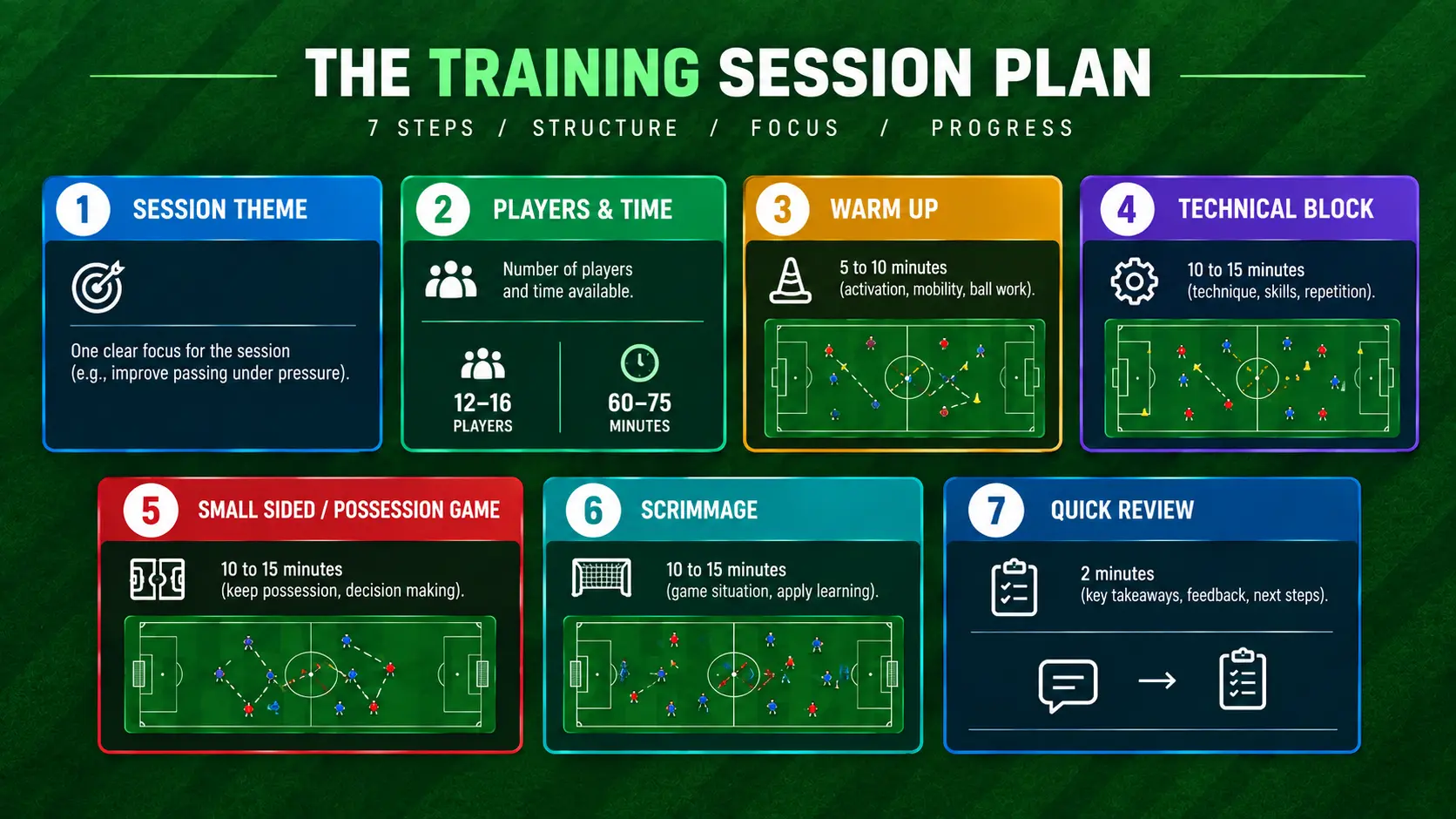
1. Session theme (one sentence). What's the single idea this session is built around. Passing under pressure, defending 1v1, finishing from crosses, pick one. Everything else in the session should connect back to it.
2. Number of players and time available. Obvious, but it changes everything else. A 45 minute session with 10 players looks different from a 90 minute session with 18.
3. Warm up (5 to 10 minutes). Something with the ball, not laps. A simple dribbling or passing activity that also raises the heart rate works better than static stretching for this age group.
4. Technical block (10 to 15 minutes). An isolated drill that trains the session's core theme directly, with minimal decision making required. This is where you build the specific skill before asking players to apply it under pressure.
5. Small sided or possession game (10 to 15 minutes). A more game realistic version of the same theme, now with opposition and decisions involved. This bridges the gap between the isolated skill and using it in a real match.
6. Scrimmage (10 to 15 minutes). A normal small sided game where you point out the session's theme happening live. This is usually where the lesson actually clicks for most players.
7. Quick review (2 minutes). One or two sentences on what went well, tied back to the session theme. Skip this and players forget the point of the session by the time they get in the car.
Your session theme should connect to a clear tactical idea, not just a random skill. The soccer tactics explained guide covers attacking and defensive principles worth building a week of sessions around.
Filling it in, example
Theme: supporting angles when in possession.
Warm up. Rondo, 5v2, one and two touch.
Technical block. Passing square drill, focus on body shape before receiving.
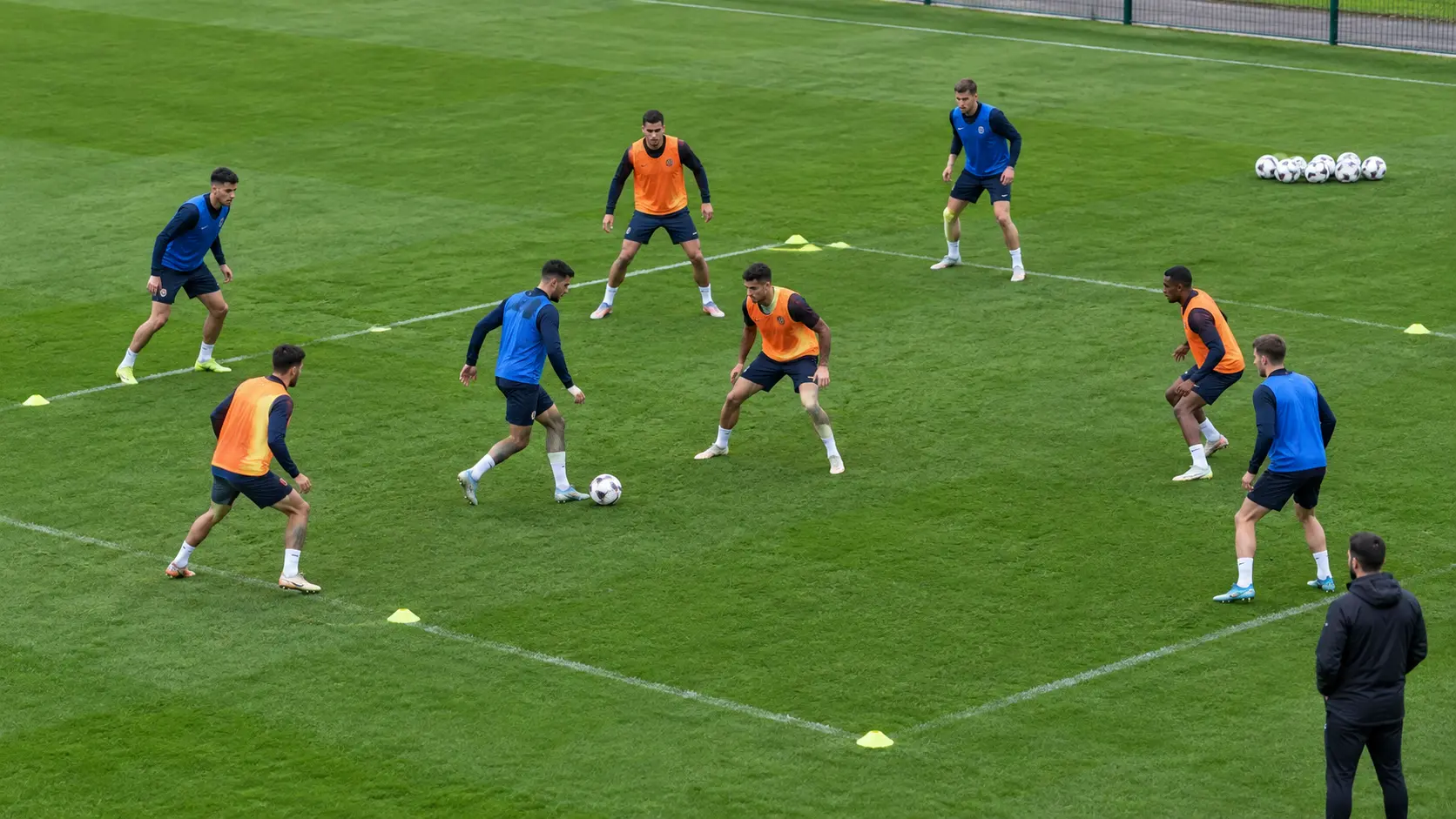
Small sided game. 4v4 possession in a grid, coach calls out when a player has good support options.
Scrimmage. Normal 5v5, coach pauses briefly when a good supporting angle happens and points it out.
Review. "Today we worked on giving the ball carrier options. Who can tell me a moment they saw that happen well?"
Same seven boxes, different themes every week. Swap the drills, keep the structure. Several of those activities are covered step by step in 10 soccer drills every grassroots coach should know, including rondo, the passing square, and constrained scrimmages.
Common mistakes to avoid
Too many themes in one session. Trying to cover passing, defending, and shooting in one evening means none of it sticks. One theme, reinforced through all four activity blocks, works better than four themes touched on briefly.
Skipping the timing. Without rough time limits per block, technical drills run long and the scrimmage gets cut to five minutes, which is usually the part players enjoy and learn from most. Set rough times and actually watch the clock.
No connection between blocks. If the warm up, technical drill, and scrimmage don't share a theme, the session feels like a random collection of activities rather than one coherent lesson. This is the single biggest difference between sessions that feel sharp and ones that feel scattered.
Making this repeatable
The template works best as something you fill in briefly before every session, not something you write once and forget. Keep a simple running log, even a notes app or a printed sheet works fine, so you can look back and see which themes you've actually covered recently instead of guessing. FIFA's own grassroots training resources follow a similar structure if you want more session examples to pull from while you're still building up your own library of themes and drills.
Over a season, having actual session plans on record also makes it easier to spot gaps, if you haven't touched a defending shape in six weeks, that shows up clearly once it's written down somewhere instead of living only in memory.
The short version
Seven boxes: theme, numbers and time, warm up, technical block, small sided game, scrimmage, review. Fill it in five minutes before training instead of improvising on the pitch, and keep every activity tied to one clear theme. It's not complicated, it just needs to actually happen every week instead of only on the weeks you remember to think ahead.