10 Soccer Drills Every Grassroots Coach Should Know
18 Sept 2026 • 7 mins read
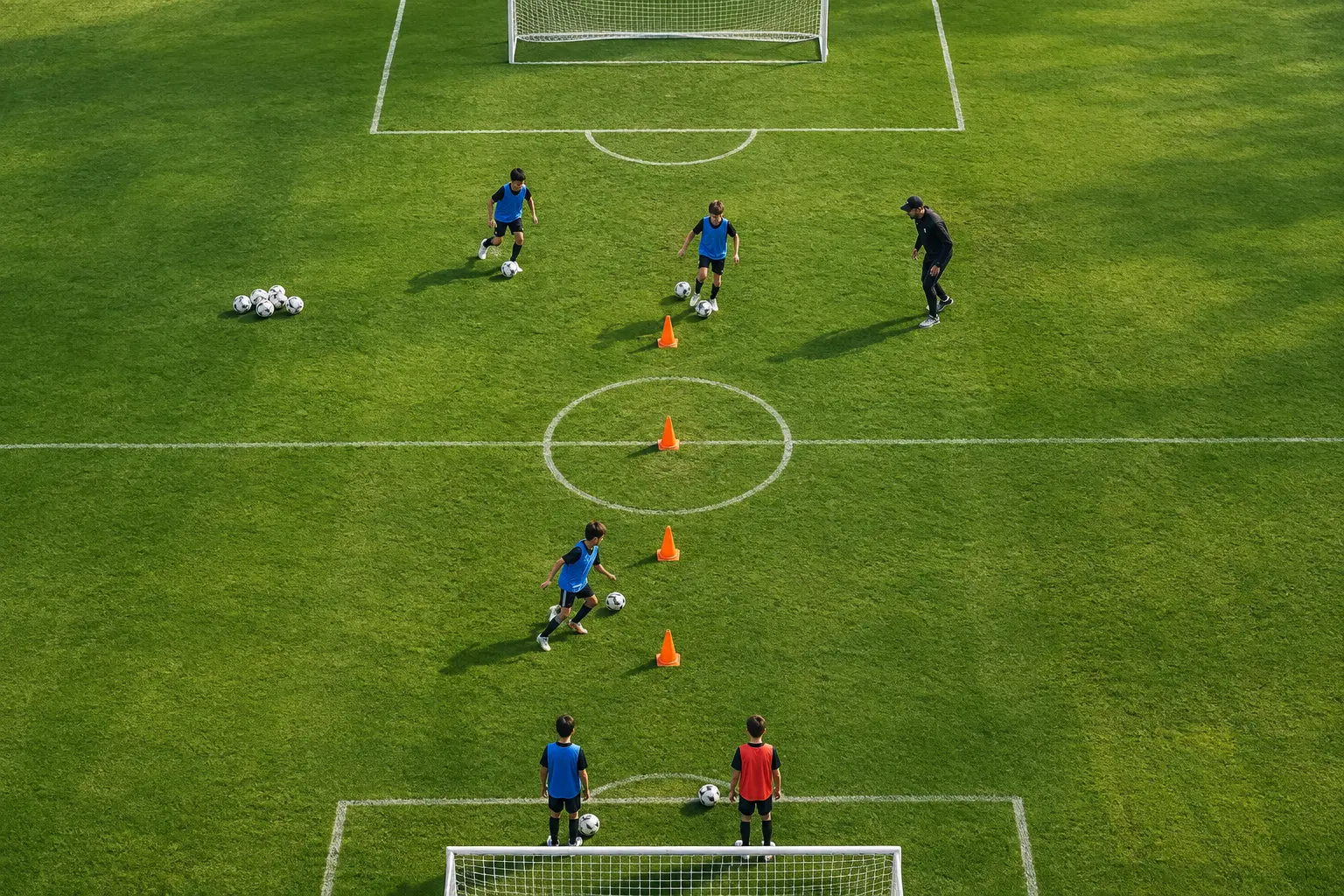
Most grassroots coaches end up running the same three or four drills every week, not because they're the best ones, but because they're the ones the coach remembers off the top of their head on a Tuesday evening with fifteen kids waiting on the pitch. Nothing wrong with that, but a small rotation of good soccer drills keeps training sharper and keeps players from switching off because they know exactly what's coming.
Here are ten that work across most age groups, need little to no equipment, and actually train something specific rather than just burning time.
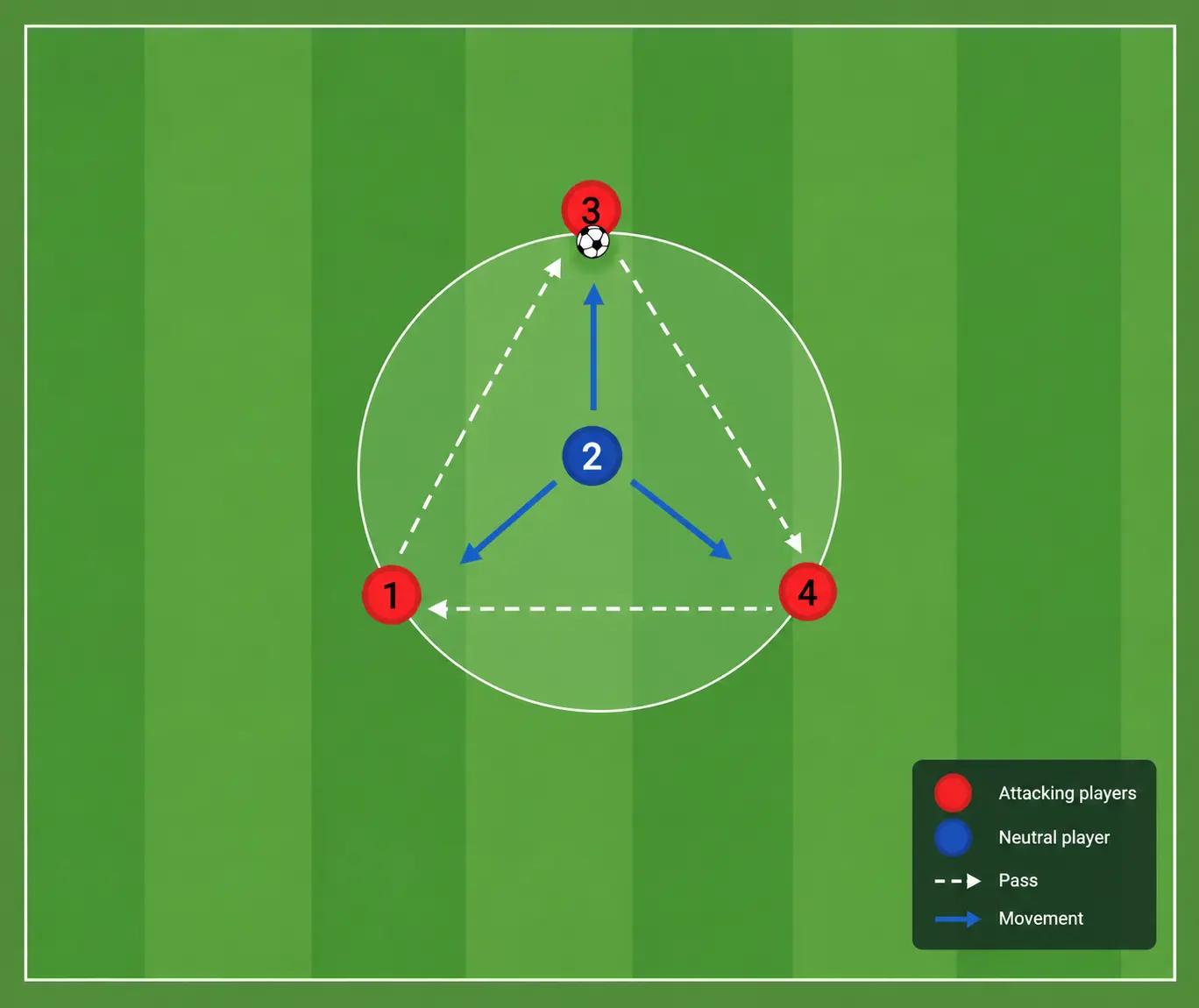
1. Rondo (Possession Circle)
Five or six players form a circle around one or two defenders in the middle. The outside players keep the ball moving with one or two touches while the defenders try to win it. Whoever loses possession swaps into the middle.
Trains quick decision making, first touch, and awareness under pressure. Works for almost any age group, just shrink the circle and touch limit for younger players.
2. 1v1 to Small Goals
Two small goals set up facing each other, a few yards apart. Two players, one ball, first to score or the ball goes out restarts. Simple, but it's one of the best drills for building confidence taking players on and defending 1v1.
3. Passing Square
Four players, one at each corner of a square, pass around the square then switch direction on a call. Add a one touch rule once players are comfortable. Builds passing accuracy and body shape for receiving under pressure.
4. Dribble Through Gates
Set up several pairs of cones as gates scattered across a grid. Players dribble through as many gates as possible in a set time, changing direction each time. Good warm up drill, builds close control and getting the head up while dribbling.
5. Shadow Defending
Pair players up, attacker with the ball moving through a channel, defender staying goal side without diving in to tackle. Switch roles after 30 seconds. Teaches defensive positioning and patience, which younger players tend to skip in favor of just charging the ball.
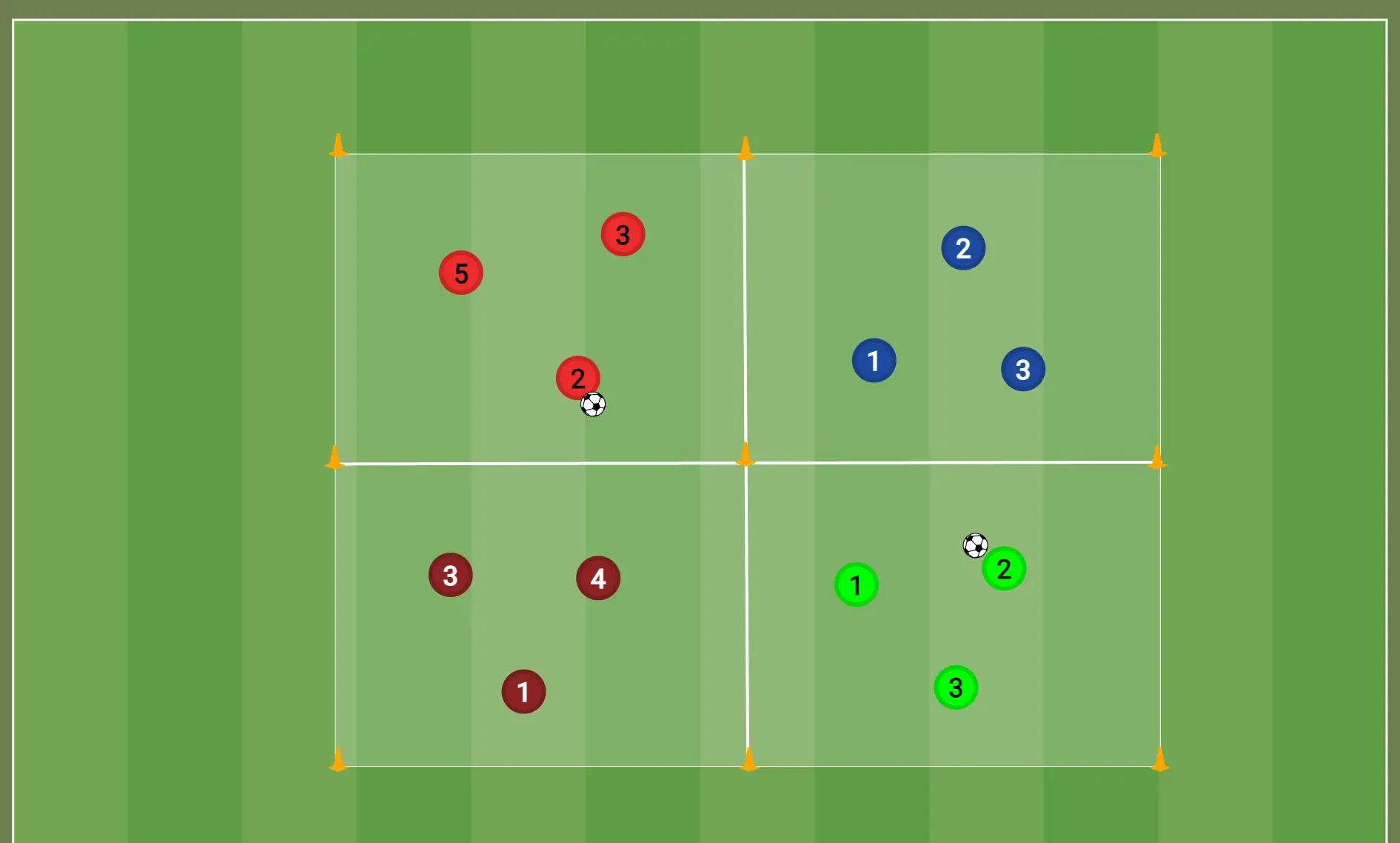
6. Possession Boxes (4v2 or 5v2)
A group keeps possession inside a grid against two defenders in the middle, similar to rondo but with more space and freedom of movement. Builds spatial awareness and passing under real pressure, not just around a fixed circle.
7. Finishing from Crosses
One player serves crosses from wide, attackers time their run to finish first time or with a controlled touch. Rotate servers and finishers. Directly trains a skill that shows up in almost every match but rarely gets dedicated practice time.
8. Transition Game (Small Sided with Quick Switches)
Small sided game, 4v4 or 5v5, but the coach calls "switch" periodically and possession changes instantly regardless of who has the ball. Forces players to react to losing and winning the ball quickly, which mirrors how matches actually flow.
9. Wall Passes (One-Twos)
Two players work a one-two pass while moving up the pitch, either against a cone or a passive defender once the movement is understood. Builds combination play and the timing of the return pass, a skill that separates teams who can actually break lines from teams who just pass sideways.
10. Scrimmage with a Constraint
A normal small sided game, but with one rule added, two touch maximum, must pass before crossing halfway, or goals only count from a first time finish. Constraints force players to solve the specific problem you're coaching for that week instead of falling back on old habits.
How to actually structure these into a session
Don't run all ten in one practice. Pick two or three that connect to a theme, technical work like passing or dribbling early in the session while players are fresh, then a possession or transition drill once they're warmed up, then close with a scrimmage that ties the theme together. A session with a clear thread through it sticks better than a random grab bag of drills, even if each individual drill is good. That kind of tactical football training is easier to coach when every part of the hour points at the same idea.
If you're mapping these out ahead of time rather than deciding on the walk to training, a written or digital session plan makes it easier to track which drills you've actually run recently instead of defaulting to the same four every week. That's worth setting up once, even if it's just a simple notes doc to start. U.S. Soccer's own coaching resource hub has more structured session plan examples if you want to go deeper.
The short version
None of these drills are complicated, and that's the point. Grassroots coaching doesn't need elaborate setups, it needs a handful of football soccer drills that train something specific, get repeated often enough to actually build the skill, and don't take fifteen minutes to explain before anyone touches a ball. Pick two or three from this list, run them for a few weeks, and swap in new ones once players have them down.