4-3-3 Formation Guide: Strengths, Weaknesses & When to Use It
18 Sept 2026 • 7 mins read
Ask ten coaches why they run a 4-3-3 and you'll get ten different answers. Some inherited it from whoever coached before them. Some copied it off a Premier League team without thinking about whether their own squad actually fits it. A few picked it on purpose, for the right reasons. This guide is for that last group, or for getting you there.
The basic shape
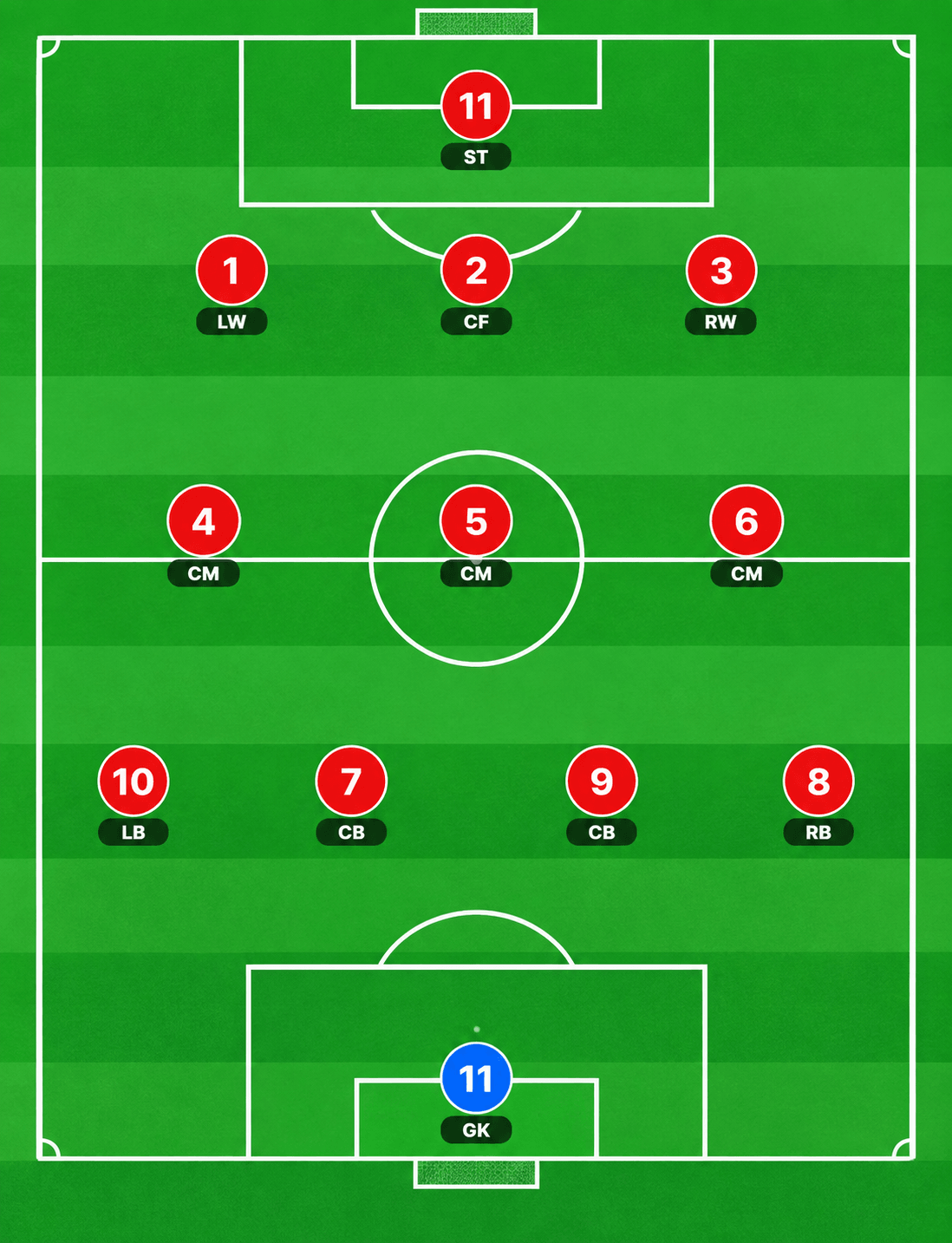
Four defenders across the back, three central midfielders, three forwards, one through the middle and two wide. That's it in its simplest form. The real character of the 4 3 3 football formation shows up in how those three midfielders and three forwards are used, not in the numbers themselves.
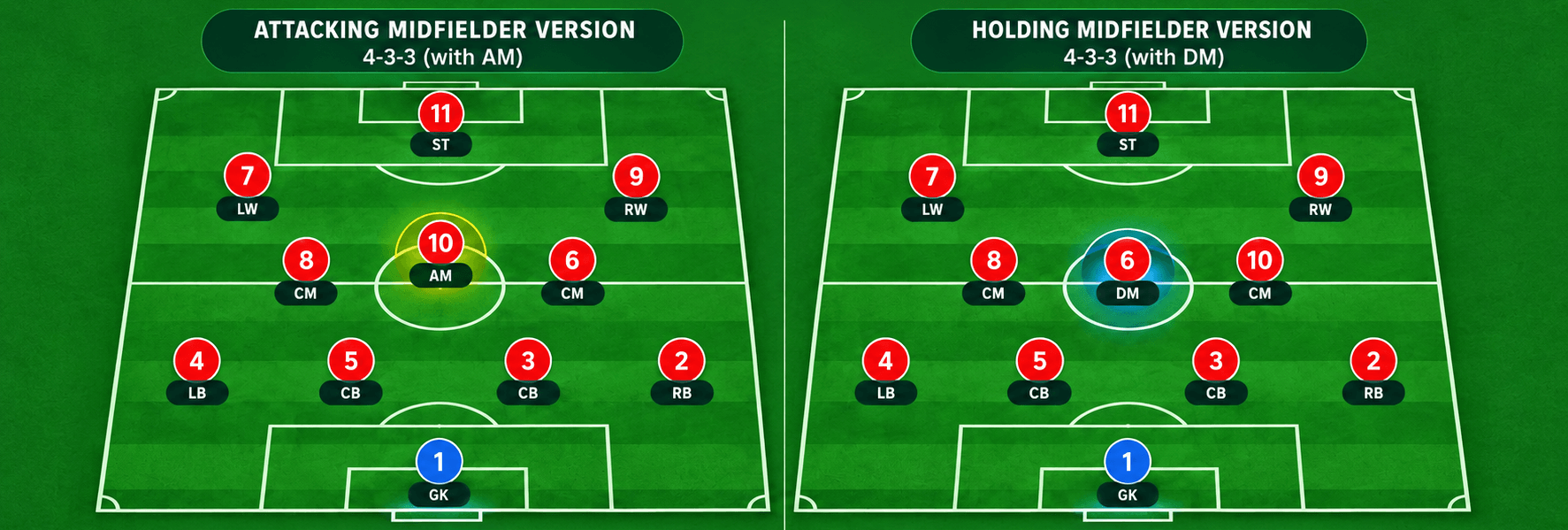
There isn't one 4-3-3. A flat back four with an attacking midfielder pushed high plays completely differently from a back four with a holding midfielder sitting deep and two box-to-box players either side. Both get called 4-3-3. Worth knowing that before you commit to it as "the" system.
Why coaches like it
Width without sacrificing the middle. The wide forwards give you natural width up top, while the back four and midfield three stay compact centrally. You get to attack wide and defend narrow, which is a good trade if your fullbacks aren't ready to bomb forward every attack.
Flexible pressing. Three forwards can press a back three or back four fairly evenly, and the midfield three gives you numbers to win the ball back centrally. Teams that like to press high often default to 4-3-3 for this reason.
Clear roles for developing players. For youth teams especially, this matters more than tactics purists admit. A winger knows their job is to stay wide and stretch play. A number 9 knows their job is to hold the line and finish chances. Simple, defined roles are easier to coach to 12 year olds than fluid positional rotations.
Where it breaks down
Fullbacks get exposed. If your wide forwards don't track back, your fullbacks are defending 2v1 against opposition wingers on a regular basis. This is the single most common problem grassroots teams run into with 4-3-3, and it usually comes down to one player, not the formation itself.
Needs a specific midfield balance. Three central midfielders sounds like plenty of cover, but if all three want to attack, you've got no protection in front of the back four. You need at least one player comfortable sitting and breaking up play. Without that, 4-3-3 can actually defend worse than a flat 4-4-2.
High fitness demand. Wingers who track back and forward, midfielders covering box to box, this formation asks a lot physically. For younger age groups without the conditioning yet, a simpler shape might hold up better over a full match.
Is it right for a youth team

This is where most of the "best formation" content online gets lazy. There's no formation that's objectively best for youth soccer. What matters is whether your players' actual ability lines up with what the formation in soccer demands.
A few honest questions worth asking before you commit to it:
- Do you have at least one central midfielder who's genuinely comfortable defending, not just attacking?
- Are your wide players willing to track back, or do they only want the ball going forward?
- Is your squad fit enough to cover the ground this formation asks for, especially in the second half?
If you answered no to any of those, that doesn't mean scrap the formation entirely. It might mean simplify the roles within it, or hold off until your squad develops into it. A 4-3-3 with players in the wrong roles usually plays worse than a simpler 4-4-2 with players who understand their jobs.
A simple way to teach it
Don't start with the full picture. Introduce the back four and midfield three first, get comfortable defending in that shape, then add the front three's movement once the defensive base is solid. Coaches who try to teach the whole formation at once usually end up with players standing in the right spots and doing nothing useful once the ball moves.
Walking players through the shape visually, showing where each position should be relative to the ball rather than just reading off a lineup sheet, tends to click faster than explaining it verbally on a whiteboard. If you're building this out on a tactics board or formation tool, showing the shift in shape from attack to defense side by side helps more than a single static diagram ever will.
The short version
4-3-3 rewards teams with at least one disciplined defensive midfielder, wide players who track back, and the fitness to cover ground for a full match. It's not automatically better or worse than 4-4-2 or 3-5-2, it's just a different set of demands on your squad. Pick it because it fits the players you actually have, not because it's what you see on TV every weekend. That principle applies to any football formation, not just this one.