Soccer Formations Explained: A Beginner's Guide to Every Formation
18 Sept 2026 • 7 mins read
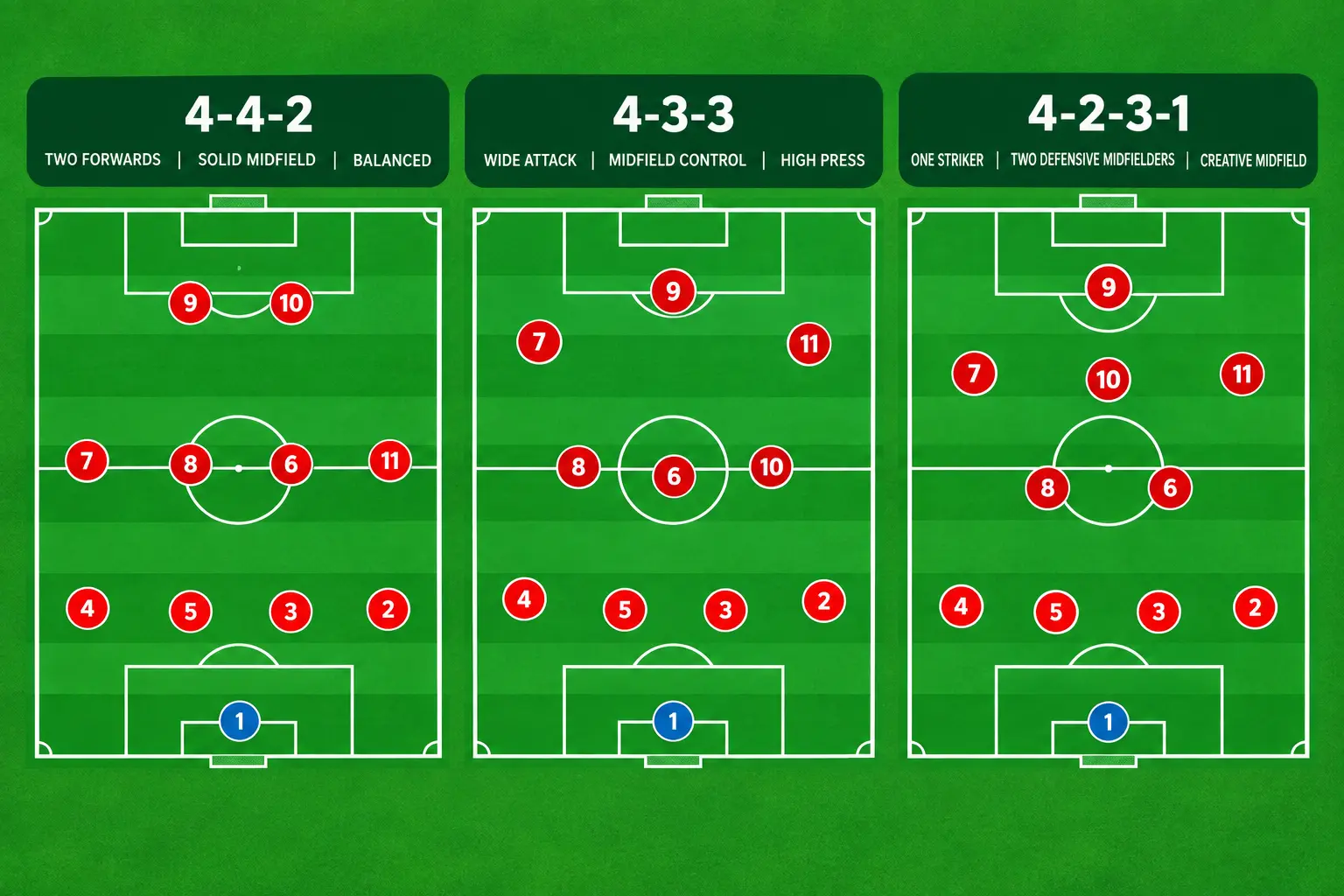
Formations get treated like a mystery sometimes, three numbers separated by dashes that somehow explain how a team plays. They're not actually complicated. A formation is just a starting shape, where players line up before the ball starts moving. What matters more than memorizing the numbers is understanding what each shape is actually trying to solve.
This is the overview. If you already know you're running a 4-3-3 and want the details on that one specifically, the deep dive on that formation covers strengths, weaknesses, and when it breaks down. This post is for stepping back and understanding formations as a whole first.
How to read a formation
The numbers count outfield players from the goalkeeper forward. A 4-4-2 means four defenders, four midfielders, two forwards. A 4-3-3 means four defenders, three midfielders, three forwards. Simple enough on paper, but the number alone doesn't tell you how a team actually plays, two teams running the same formation can look completely different depending on how compact they are, how much width they use, and where the extra bodies in midfield are positioned.
Think of the formation as the starting point, not the instruction manual. What a team does with the shape once the ball starts moving matters more than the shape itself.
The most common formations, explained simply
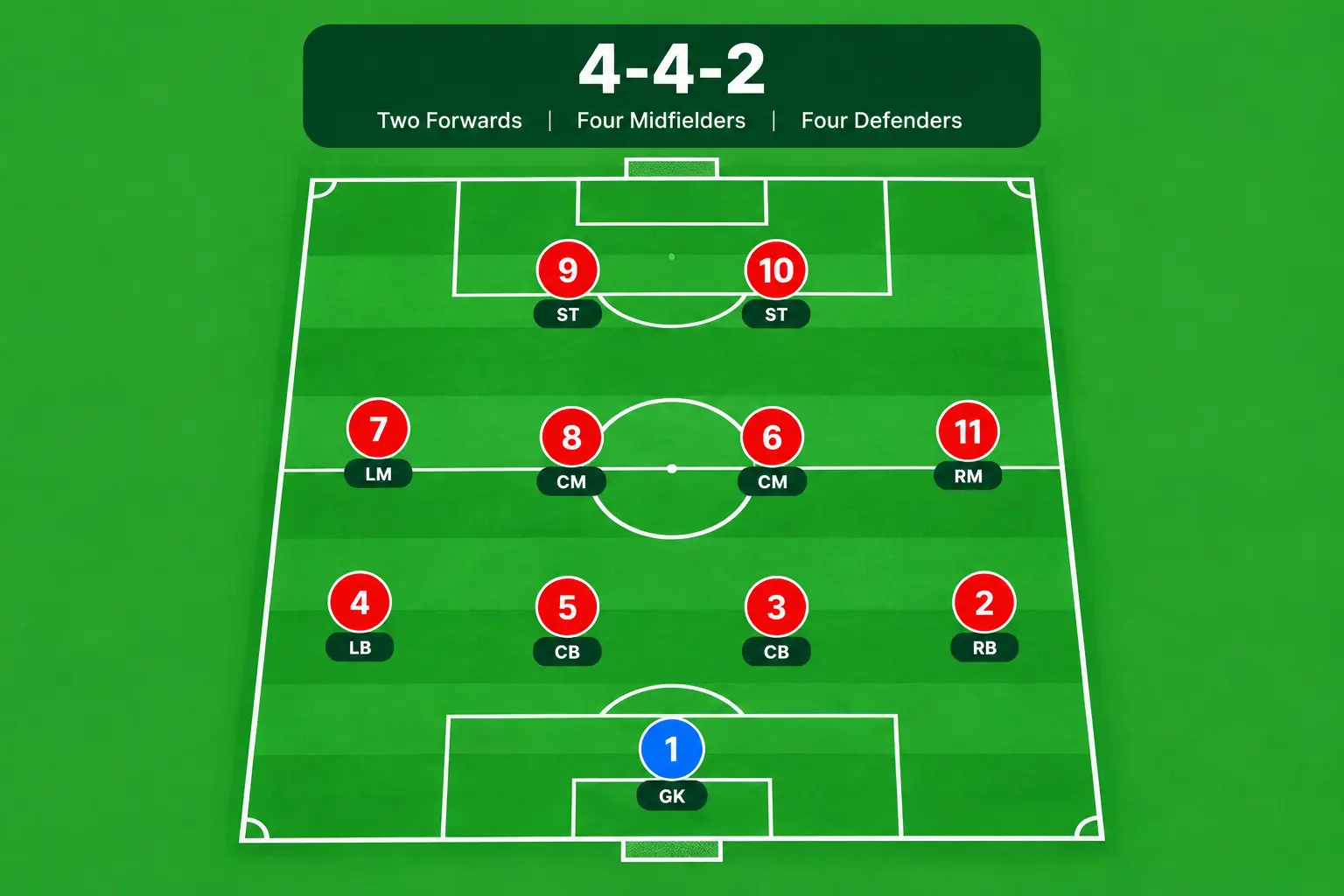
4-4-2. Two banks of four across the back and midfield, two forwards up top. Easy to teach because the roles are simple and symmetrical, which makes it a common starting point for younger or newer teams. Weakness is that it can get outnumbered in central midfield against a team running three central players.
4-3-3. Four defenders, three central midfielders, three forwards spread wide and central. Gives good width and flexible pressing, but needs at least one disciplined defensive midfielder or the back four gets exposed.
4-2-3-1. Four defenders, two holding midfielders, three attacking midfielders behind a single striker. More defensively solid in central midfield than a straight 4-3-3, popular at higher levels for that reason, but asks a lot of the lone striker who often has to hold the ball up alone.
3-5-2. Three center backs, five across midfield including wing backs, two forwards. Strong in central areas and good for teams with attacking wing backs, but leaves space in behind if those wing backs get caught upfield, since there's no natural fullback cover.
3-4-3. Three at the back, four in midfield, three forwards. Aggressive and attacking, good for teams that want to press high and control possession, but similarly exposed in behind the wing backs as 3-5-2, with less central midfield presence to compensate.
Formations for smaller-sided youth games
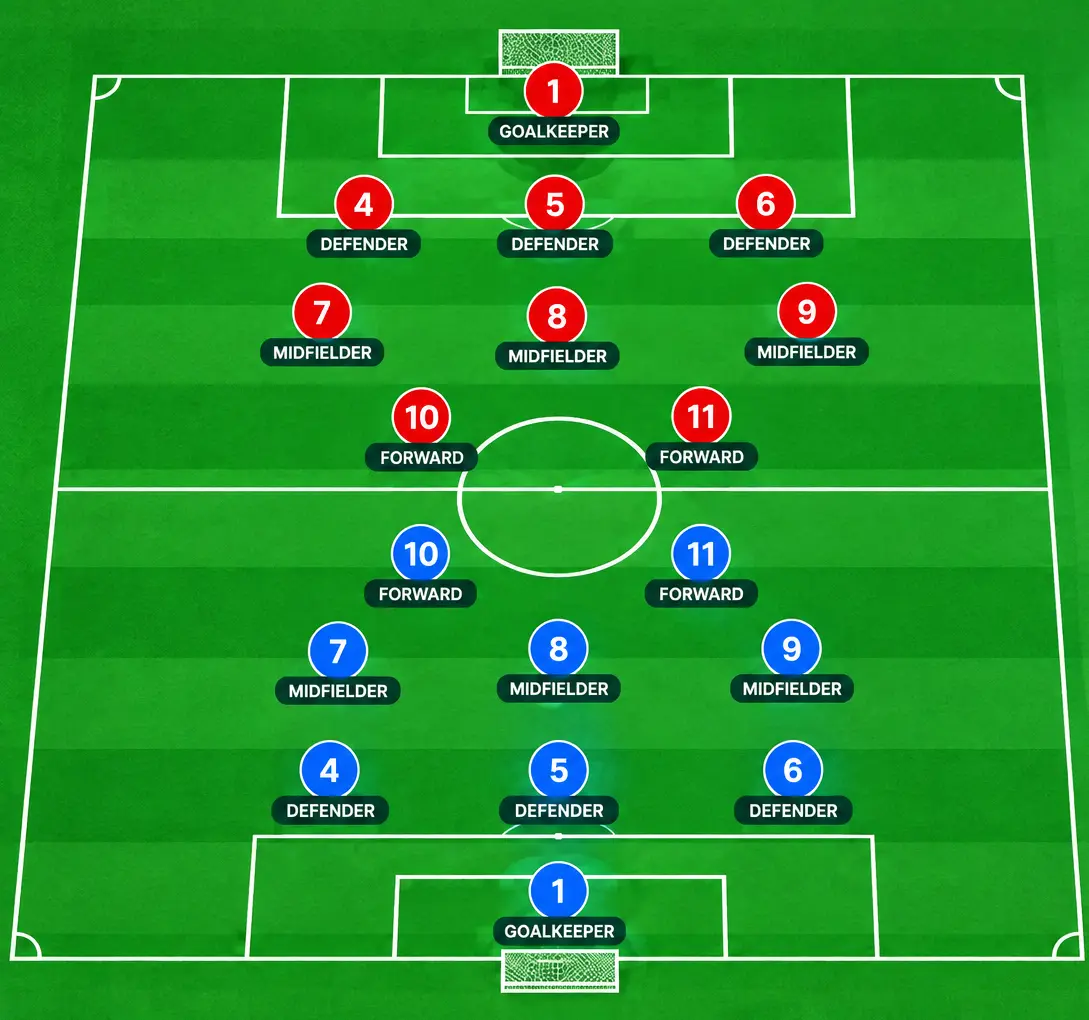
A lot of youth football isn't played 11v11, it's 7v7 or 9v9 depending on age group, and formations scale down with fewer players on the pitch. The same principles still apply, spread the pitch with width, keep some defensive shape, give players clear roles, but the exact numbers look different. A 9v9 game might run something closer to a 3-2-3 or 3-3-2 rather than a full 4-3-3. If your league plays a smaller format, don't just shrink an 11-a-side formation, think through what the roles need to be with fewer players on the pitch instead.
How to pick a formation for your team
Three things matter more than what looks good on paper.
Your players' strengths, not the formation's reputation. A formation used by a top club doesn't automatically fit a grassroots or youth squad. If you don't have players comfortable holding a disciplined midfield role, a formation that depends on one won't work no matter how good it looks on television.
How many players naturally fit each role. If half your squad wants to attack and nobody's comfortable defending centrally, a formation asking for two holding midfielders is fighting your squad rather than working with it.
How much you can actually coach in the time you have. A simple, symmetrical shape like 4-4-2 is easier to teach in limited weekly training time than something requiring specific wing-back positioning or a lone striker holding the ball under pressure.
Common mistakes when choosing a formation
Copying what's on TV without checking it fits. The formation a Premier League team runs was built around specific, highly trained players in specific roles. Grassroots and youth squads rarely have that same depth, so copying the shape without the personnel to support it usually backfires.
Changing formation too often. Switching shape every few weeks means players never get comfortable with the roles and responsibilities that come with it. Pick one, coach it properly for a stretch of the season, and only change it for a clear reason.
Ignoring fitness demands. Some formations, like 3-5-2 or 3-4-3, need wing backs with real stamina to cover ground up and down the pitch. If your squad isn't there fitness-wise yet, a formation that depends on that stamina will look disorganized regardless of how well it's coached.
The short version
A formation is a starting shape, not a full tactical plan on its own. Pick one that fits the players you actually have, not the one that looks best on paper, coach it consistently, and adjust the details, width, pressing, roles, rather than switching the whole shape every few weeks. Once you've settled on a formation, the 4-3-3 guide is a good next read if that's the shape you're considering.