Soccer Tactics Explained: How to Plan and Visualize Plays
21 Sept 2026 • 7 mins read
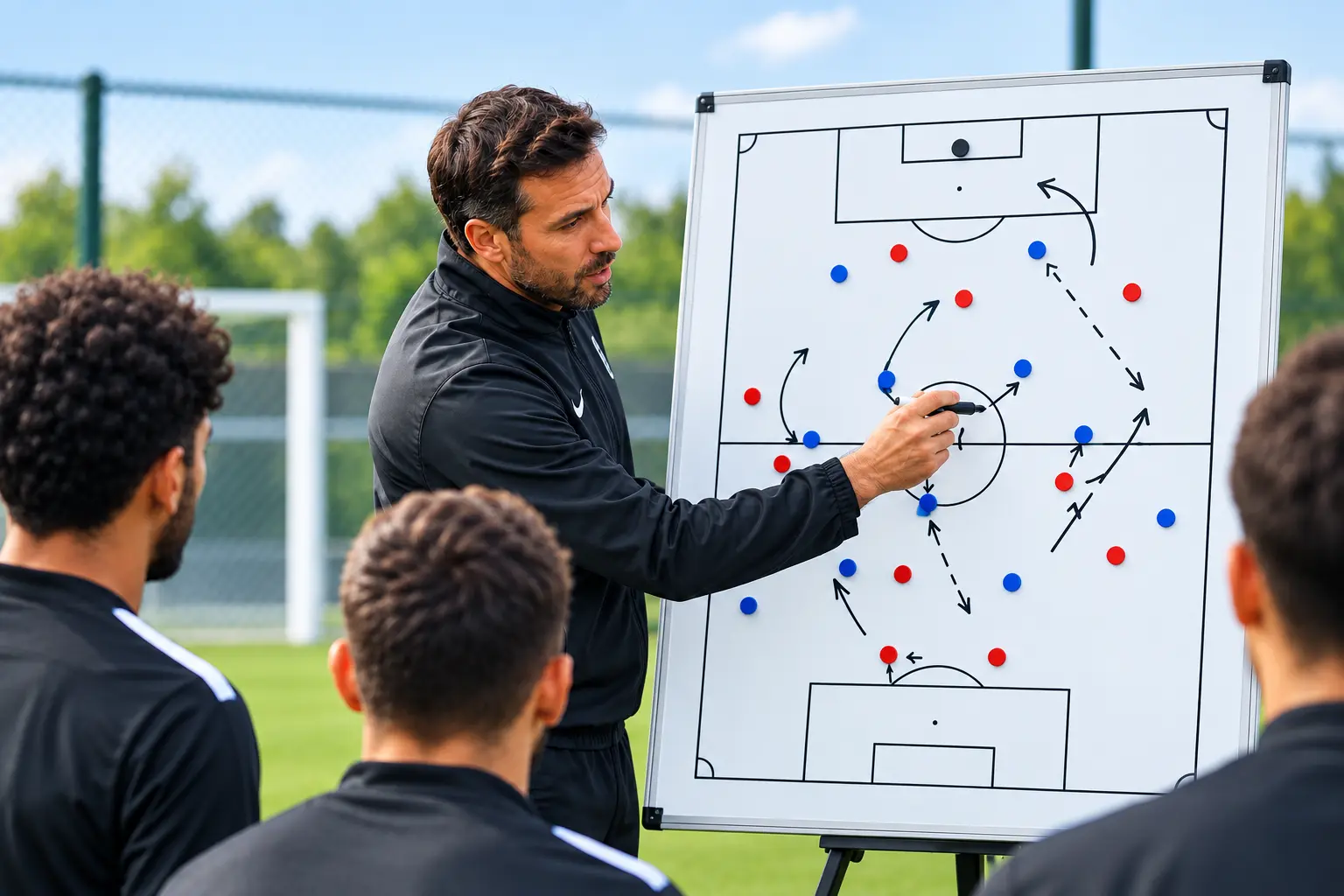
Most grassroots teams don't lose because the players lack skill. They lose because nobody on the pitch knows what to do when the ball moves somewhere unexpected. That's a tactics problem, not a talent problem, and it's fixable with a lot less complexity than most coaching content makes it sound.
This is a practical walkthrough of the tactical ideas that actually matter at grassroots and youth level, how to plan them before a session, and how to get them across to players who tune out the second a whiteboard talk runs past two minutes.
What tactics actually means at this level
Strip away the jargon and tactics comes down to two questions. What do we do when we have the ball, and what do we do when we don't. Everything else, formations, pressing triggers, build-up patterns, is detail sitting on top of those two questions.
A team that answers both clearly, even with simple answers, will usually beat a team with a fancier system and no shared understanding of what to do. Simplicity that players actually remember beats complexity they forget the moment the whistle blows.
UEFA's own annual coaching review breaks down these same principles at the professional level.
Attacking principles worth teaching first
Width. Spread the pitch so defenders have to make choices about who to cover. A team bunched in the middle makes the opponent's job easy.
Movement off the ball. Players who only move when they have the ball are predictable and easy to mark. Teaching players to move into space before they receive it, not after, is one of the highest value things you can coach at any age.
Supporting angles. A player on the ball needs passing options at different distances and angles, not three teammates standing in a flat line behind them. This is worth walking through on a board before it's worth drilling on the pitch, since it's a positioning concept first and a physical skill second.
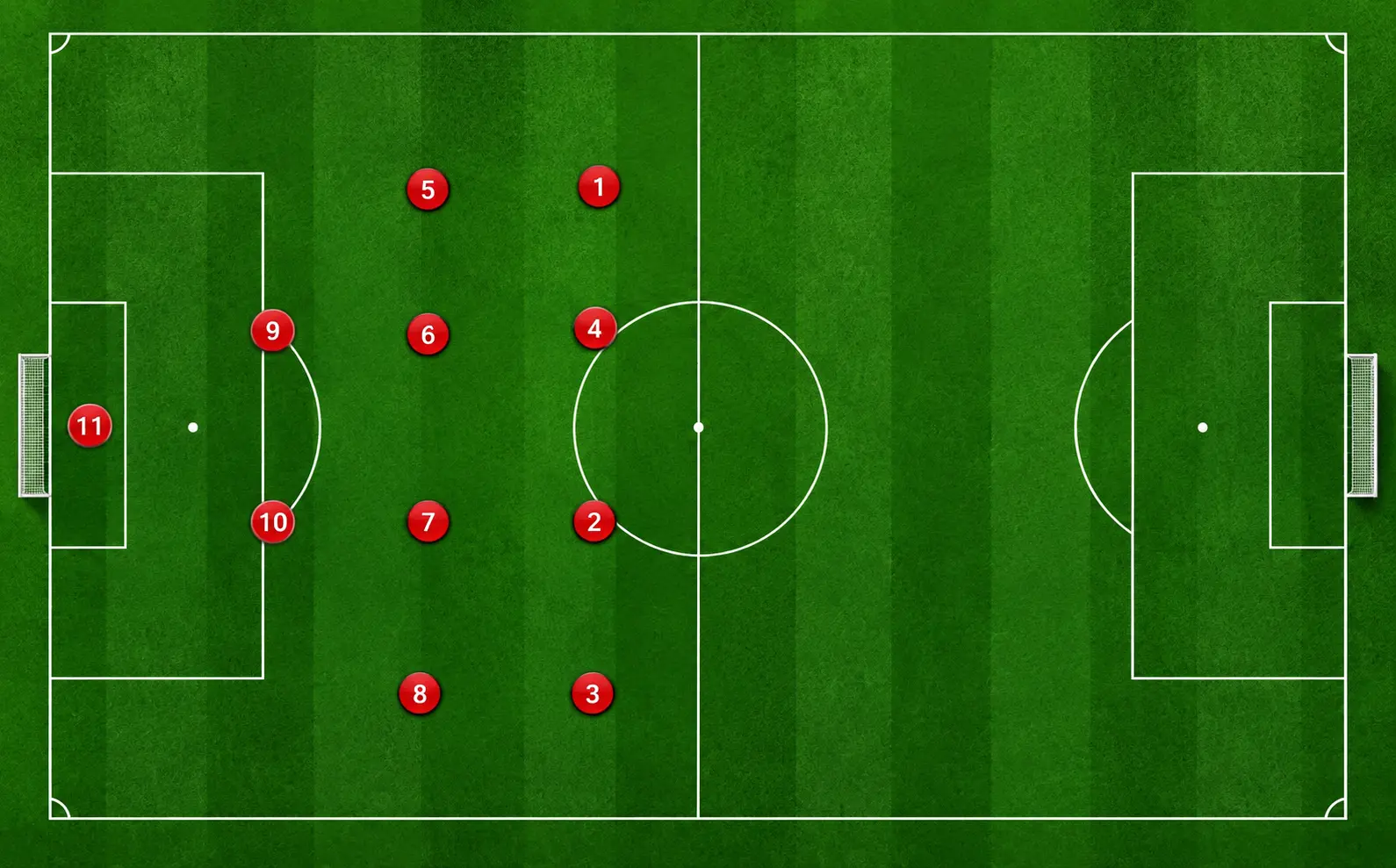
These ideas connect tightly to how you set the team up. If you're already thinking about structure and roles, the 4-3-3 formation guide covers how supporting angles and movement off the ball show up inside a specific shape.
Defensive principles worth teaching first
Compactness. Keeping the team close together vertically and horizontally limits the space opponents can play into. This matters more at grassroots level than pressing schemes or offside traps, which need a level of coordination most youth teams aren't ready for yet.
Delay before commit. Teach defenders to slow an attacker down and force a decision rather than diving into a tackle immediately. A defender who commits early and misses leaves a gap that's usually worse than the original problem.
Cover behind the first defender. Whoever is closest to the ball pressures it, but someone else needs to be positioned to cover if that first defender gets beaten. Without this, one missed tackle turns into a clean run at goal.
How to actually plan a tactical session
Pick one idea, not five. A session built around "supporting angles when we have the ball" will stick. A session that tries to cover width, pressing, compactness, and transitions in one evening won't, players leave with a blur of ideas and retain none of them.
Structure it in three stages. Start with a small, controlled exercise where the tactical idea is isolated and easy to see, something like a possession game in a tight grid to work on supporting angles. Move into a slightly bigger, more game realistic version of the same idea. Finish with a scrimmage where you can point out the idea happening in a live game context, which is where it actually clicks for most players.
If you need concrete exercises for those stages, the 10 soccer drills every grassroots coach should know post covers possession grids, transition games, and constrained scrimmages that map cleanly onto this session structure.
Getting it across without losing the room
Coaches often over-explain. Two minutes of talking is usually the ceiling before players stop absorbing anything, especially younger age groups. A few things that help:
Show it before you explain it. Walk two players through the movement physically rather than describing it verbally first.
Use the pitch or a board to show shape, not just words. Players who are visual learners, which is most kids, pick up positioning concepts faster from seeing the shape than from hearing it described.
Ask a question instead of stating the answer. "Where should you be standing right now if he passes it to me?" gets more buy-in than "stand here."
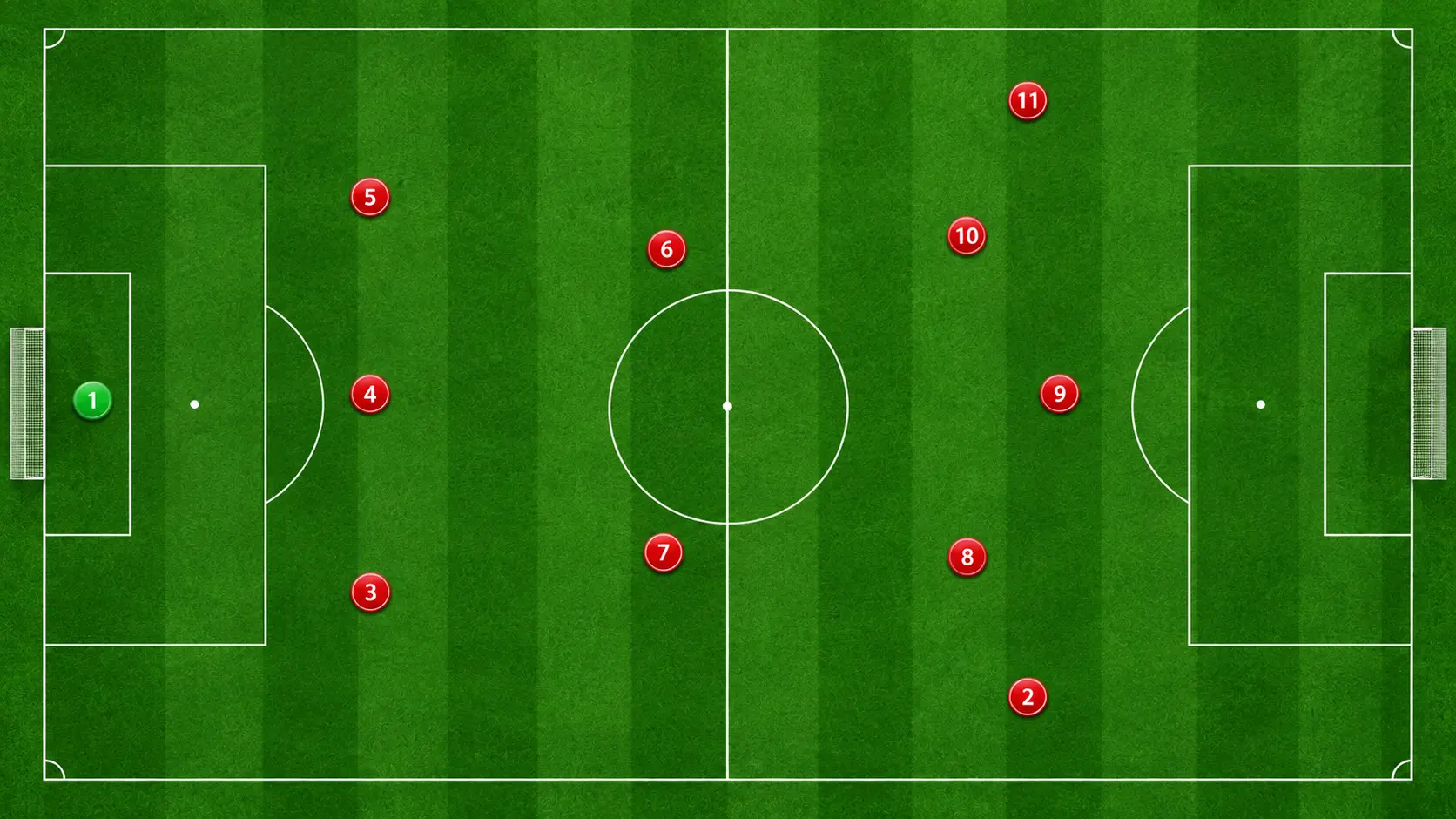
Visualizing shape and movement before a session, rather than figuring it out live on the pitch, also saves a huge amount of coaching time. A quick sketch of where you want players positioned during a specific phase of play, whether that's on paper or a digital tactics board, means you walk into training already knowing what you're trying to show rather than improvising it in front of the team.
The short version
Good tactics at grassroots level isn't about copying a professional system. It's picking one or two clear principles, attacking and defending, planning how you'll teach them before the session starts, and getting players to see the idea rather than just hear it. Do that consistently over a season and you'll out-organize teams with more individual talent but less shared understanding of what to do with it.