How to Run Effective Soccer Set Pieces: Corners and Free Kicks
28 Sept 2026 • 7 mins read
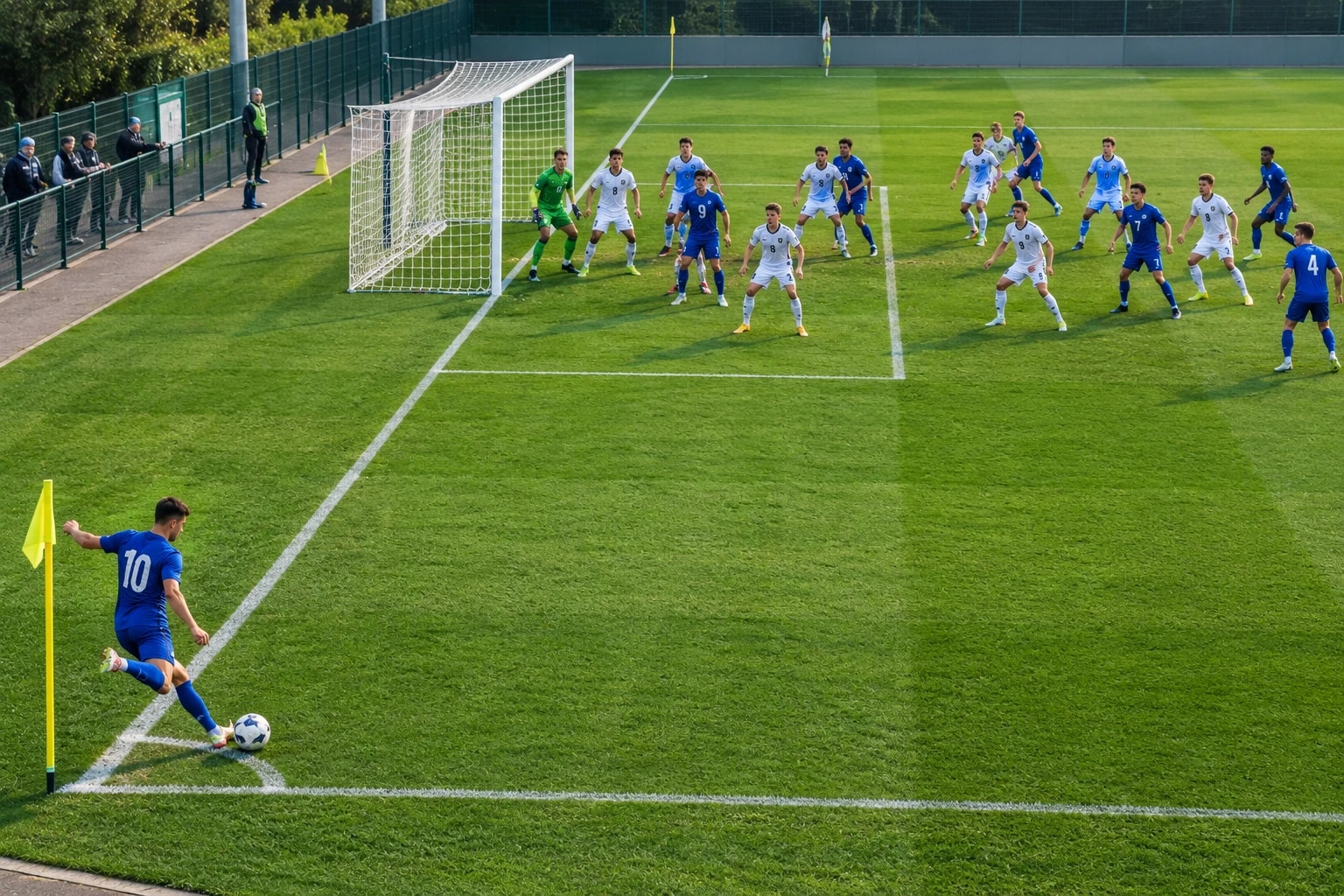
A meaningful share of goals at every level of football come from set pieces, corners and free kicks specifically. At grassroots and youth level, this number is often even higher, since defensive organization is usually weaker than open-play attacking structure. If your team doesn't have at least one or two practiced routines, you're leaving free chances on the table every single match.
This isn't about copying complicated professional routines. It's about having two or three simple, well drilled options that your players actually understand and can execute under a bit of pressure.
Why set pieces deserve dedicated practice time
Open play is chaotic, players react to whatever's happening in real time. A set piece is different, it's a moment where the game pauses and you get to dictate exactly what happens next, every player knows where they're supposed to be before the ball is even played. That predictability is exactly why a bit of practice time here pays off disproportionately compared to open-play drilling.
Most grassroots teams treat set pieces as an afterthought, tacked onto the end of a session if there's time left. Flipping that, even ten minutes a week dedicated specifically to set pieces, tends to produce noticeably more goals over a season than the same ten minutes spent on another possession drill. Soccer Coach Weekly has more example routines if you want additional options beyond what's covered here.
Simple corner kick routines that actually work
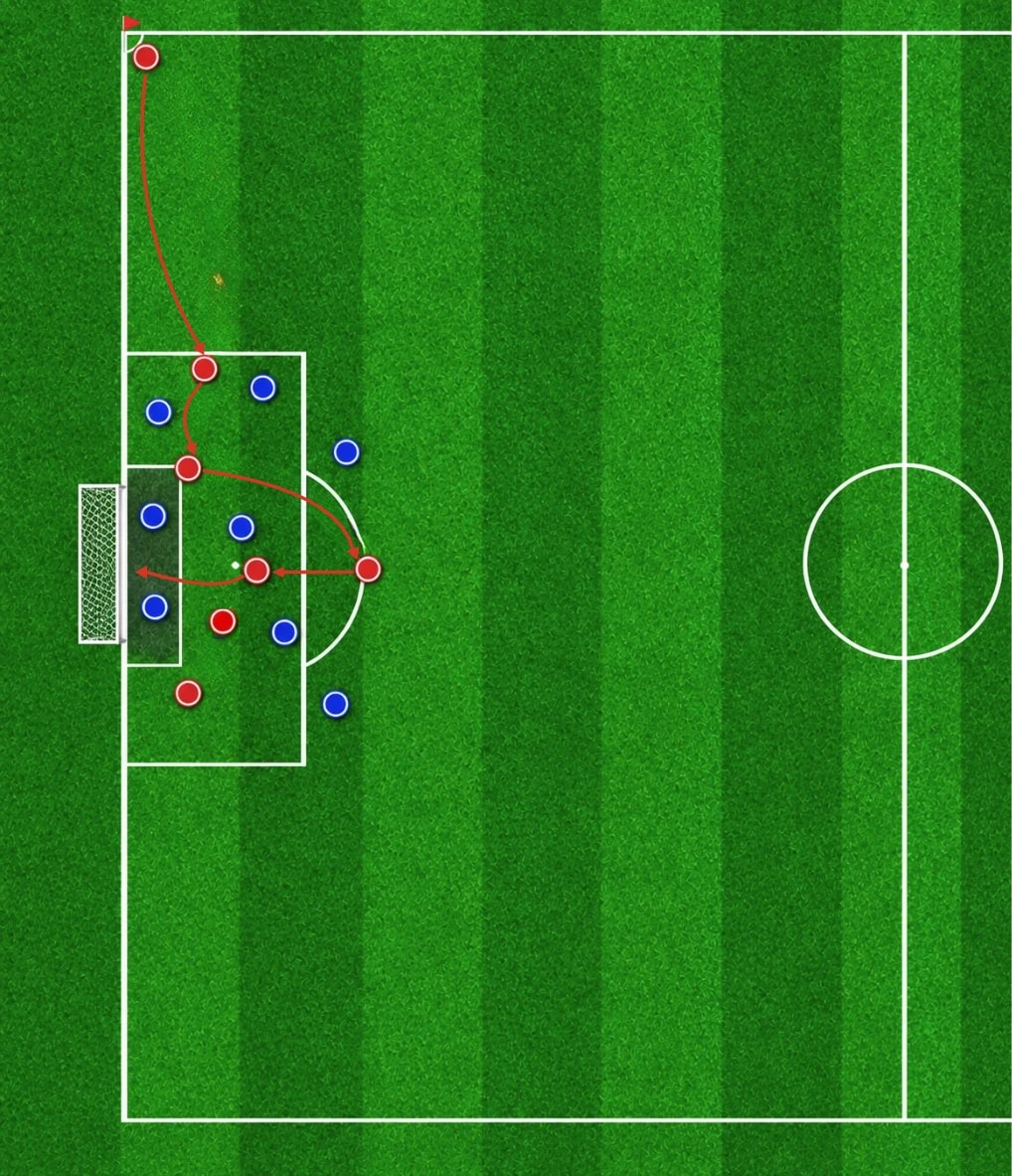
Near post flick-on. The corner taker aims for a player positioned at the near post, who flicks the ball on with a glancing header toward the back post or the six yard box, where a second attacker is waiting. Works well because it's quick, hard for defenders to react to, and doesn't require pinpoint delivery from the corner taker.
Short corner to create an angle. Instead of crossing directly, the corner taker plays a short pass to a nearby teammate, who then delivers a cross from a better angle or cuts inside for a shot. Useful against teams that pack the box heavily, since it draws a defender out and changes the delivery angle.
Far post targeting. Aim the corner deliberately past the crowd at the near post toward a player making a run to the back post. Works best with a player who has good timing and heading ability, since it relies on beating the last defender to the ball rather than outmuscling a crowd.
Pick one, drill it repeatedly until players can execute it without thinking, then add a second option once the first is genuinely reliable.
Simple free kick routines
Direct strike, when close enough to goal. Have one or two designated takers who practice this specifically, most grassroots free kick goals come from a well struck ball more than a complicated setup.
The training ground pass around the wall. From further out, a short pass around or through a gap in the wall to a teammate who takes a first-time shot can catch a defense that's only prepared for a direct cross or strike.
Cross into the box, same principles as a corner. For free kicks in wide areas, the same near-post flick-on or far-post targeting routines used for corners usually apply just as well.
Defending set pieces matters just as much
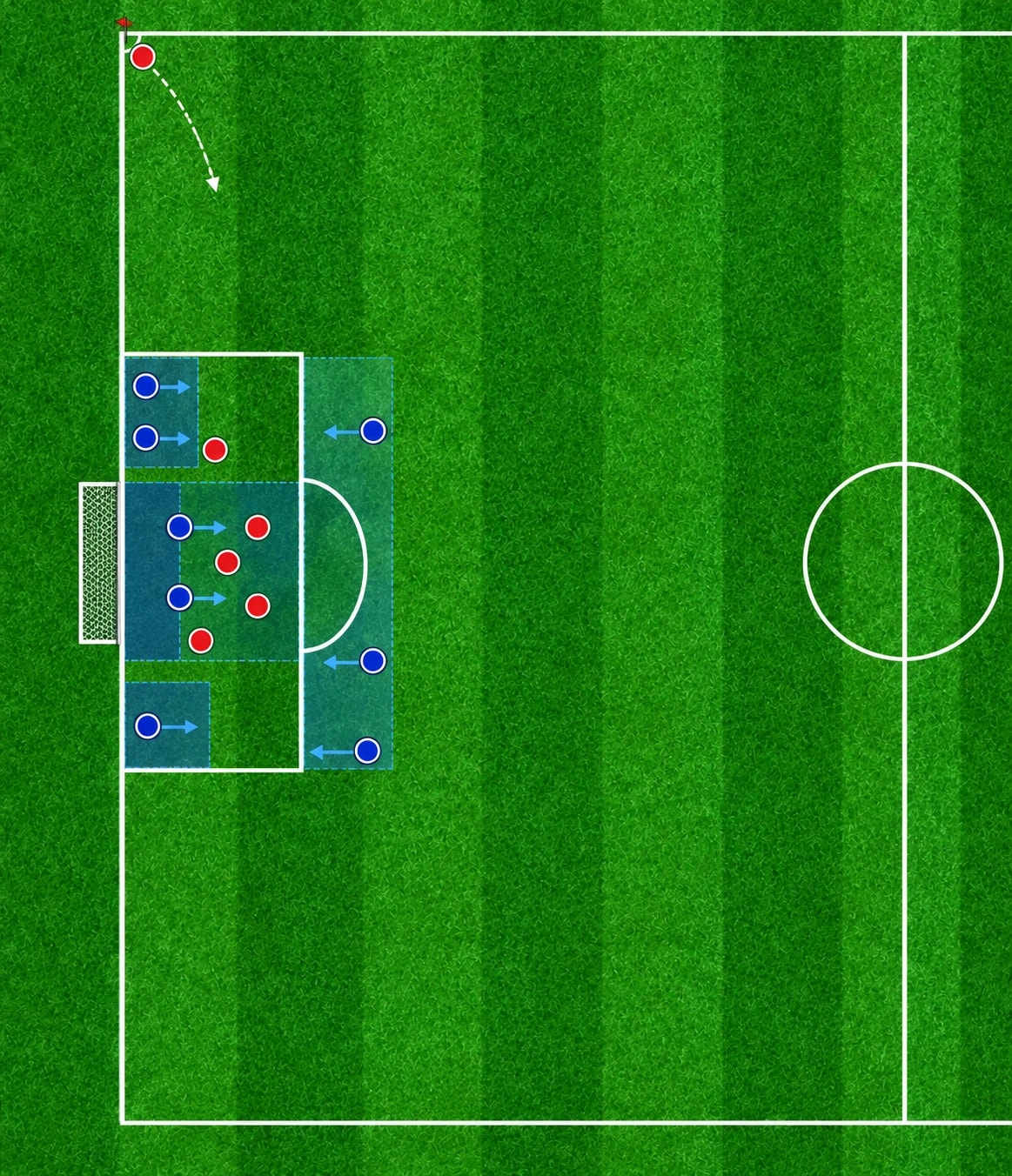
Assign clear roles, don't leave it to chance. Every player should know exactly who they're marking or which zone they're covering before the set piece is taken, not figure it out as the ball comes in.
Zonal vs man marking, pick one and stick with it. Zonal marking, where players cover an area rather than a specific opponent, tends to be easier to coach at grassroots and youth level since it doesn't rely on players tracking a specific opponent's movement under pressure. Man marking can work but needs more individual discipline to execute well.
Always have at least one player not attacking the ball. Keep a player or two back near the edge of the box or slightly deeper to cover a clearance or a quick counter attack if the set piece breaks down. Conceding a fast break goal right after defending a corner is one of the most preventable mistakes in grassroots football.
How to actually practice this
Ten to fifteen minutes at the end of a session works well, once players are already a bit tired, which is closer to match conditions than practicing set pieces fresh at the start of training. Walk through the routine slowly first with no opposition, then add passive defenders, then live defenders once the movement is understood. Repeat the same one or two routines across several weeks rather than introducing something new every session, repetition is what makes a routine actually reliable in a real match. Several of the activities in 10 soccer drills every grassroots coach should know work well as warm-ups before you move into live set piece reps.
Planning the movement on a tactics board before you walk it on the pitch also helps players see the shape of the routine clearly.
The short version
Set pieces are one of the highest value, lowest effort areas to coach at grassroots and youth level, a genuine scoring opportunity where you control the setup completely. Pick two or three simple routines, both attacking and defending, drill them properly instead of treating them as an afterthought, and you'll likely see more goals from dead ball situations by the end of the season than from almost anything else you coach.