How to Coach Youth Soccer: A Beginner's Guide for New Coaches
28 Sept 2026 • 7 mins read
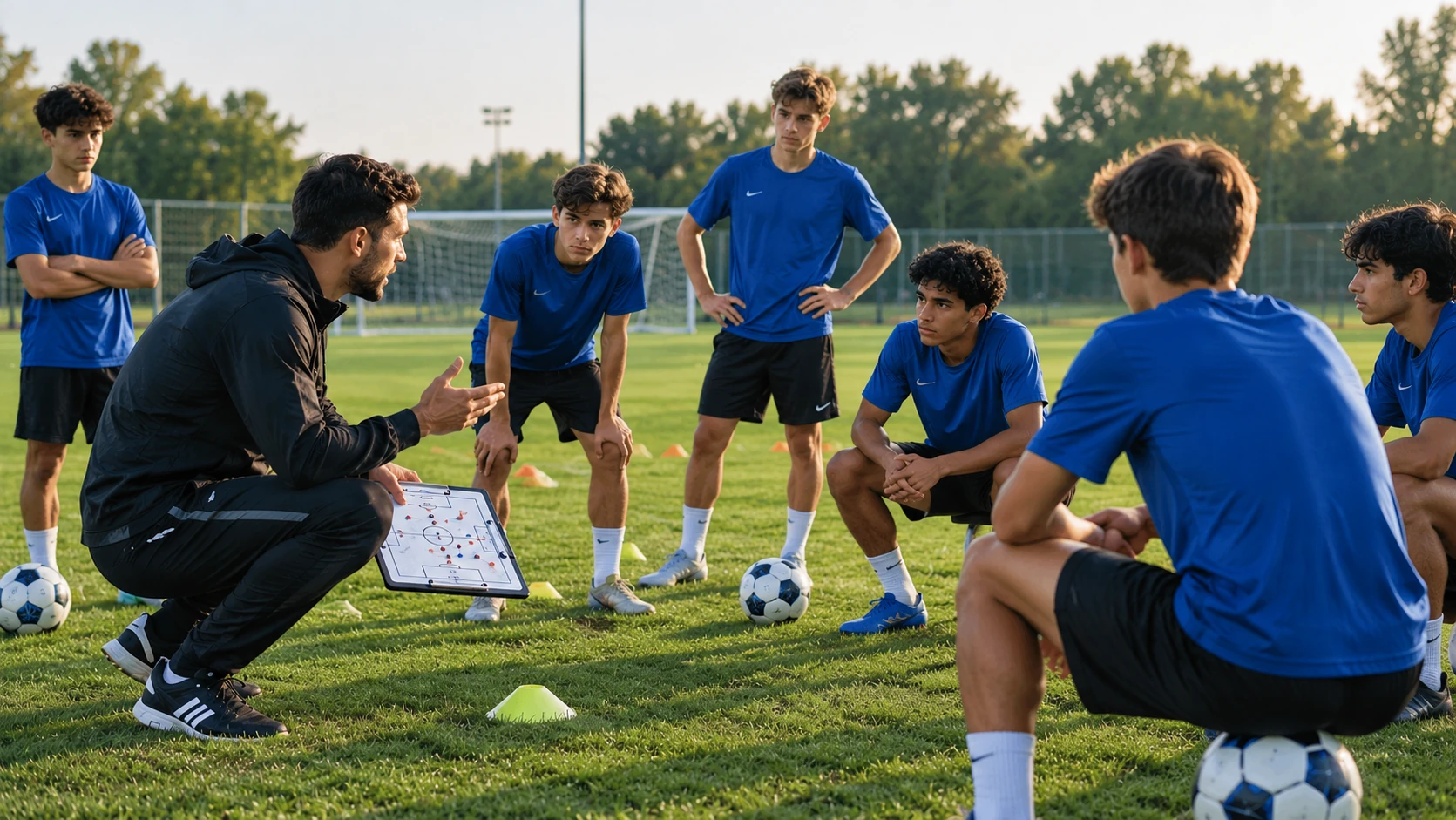
Most first-time youth coaches get handed a team roster, a bag of balls, and not much else. No manual, no formal training in a lot of cases, just a season starting in a couple of weeks and fifteen kids who expect someone to be in charge. If that's you right now, this is the starting point that actually matters, not the tactics or drills, those come later, but the fundamentals that make the difference between a season that goes smoothly and one that doesn't.
Know what your job actually is
At the youngest age groups especially, your job isn't to produce the next generation of professionals. It's to make sure kids have fun, stay active, learn basic skills, and want to come back next season. Coaches who forget this and coach like they're preparing players for a professional trial usually burn kids out, and burned out eight year olds don't become better players, they quit the sport entirely.
That doesn't mean skip structure or standards, it means the standard is age-appropriate development and genuine enjoyment, not results.
Structure practice around a simple pattern
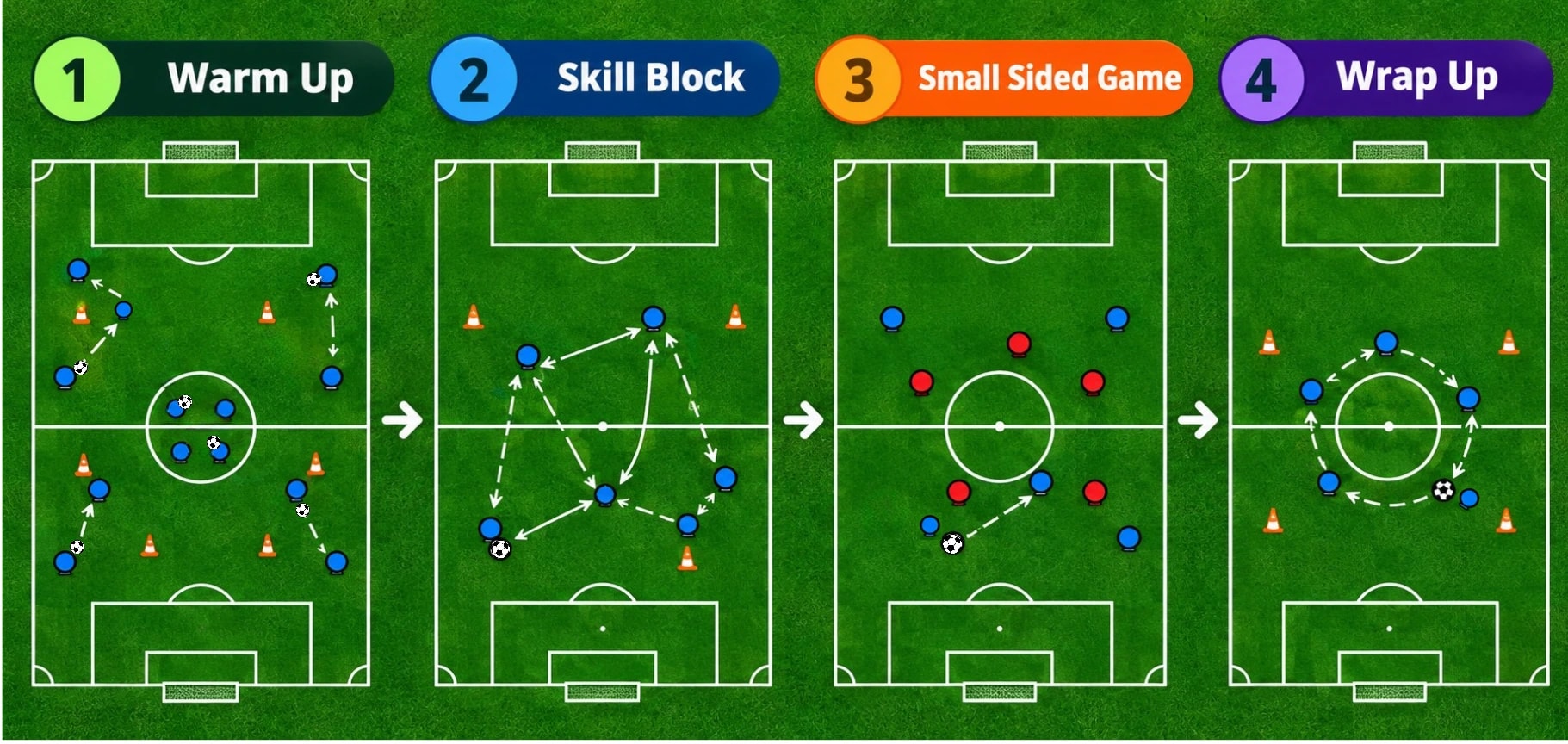
New coaches often either wing it completely or overplan to the point of confusion. A simple repeatable structure solves both problems: a short ball-focused warm up, a skill-focused block on one or two techniques, a small-sided game that applies those skills, then a brief wrap up. If you want the full breakdown of building this out week to week, the session plan template covers it in more depth, but the short version is, keep every kid moving and touching the ball as much as possible, standing in lines waiting for a turn is where attention and energy go to die.
Coach to the age group in front of you, not the sport in the abstract
Younger kids, roughly under 8, need short attention spans respected, lots of variety, and games disguised as skill work rather than isolated drilling. Kids around 9 to 12 can handle more structured skill work and start understanding basic tactical concepts like passing to space. Teens can handle real tactical complexity and more direct, honest feedback.
Using drills or explanations pitched at the wrong age is one of the most common first-season mistakes. A tactical explanation that works for a 13 year old will lose a 7 year old completely within thirty seconds.
Safety and basic organization come before anything tactical
Before the first practice, know your league's concussion and injury protocols, keep a basic first aid kit on hand, and have emergency contact information for every player accessible, not buried in an email somewhere. None of this is exciting to think about, but it matters more than any drill you'll ever run, and most leagues actually require it before you're allowed to coach anyway. U.S. Youth Soccer's own coaching resources cover league-specific safety requirements in more depth if you want to check what your region requires.
Talk to parents early, not after a problem starts

A short parent meeting before the season, even five minutes after the first practice, saves a huge amount of friction later. Cover playing time expectations, communication methods, and what you actually need from them, getting kids to practice on time, communicating absences, staying positive on the sideline. Coaches who skip this and only communicate when something's gone wrong tend to have a much rockier season with parents than coaches who set expectations up front.
Give feedback that actually helps
Specific, positive, and immediate beats vague praise every time. "Good job" tells a kid nothing they can repeat next time. "Nice, you looked up before you passed that" tells them exactly what worked and gives them something to do again. This applies to correction too, name the specific thing to work on rather than a general "try harder."
Common mistakes almost every new coach makes
Running practices with too much standing around. If a kid is in a line waiting more than a few seconds regularly, that's lost development time and lost attention. Small sided setups with multiple balls and multiple mini-games running at once fix this almost immediately.
Coaching results instead of development. Especially at young ages. Getting attached to winning a scoreline at U8 usually means overcoaching, playing your best kids more minutes, and yelling instructions constantly from the sideline. None of that actually helps kids improve, and it's a fast way to make soccer feel like pressure instead of fun.
Not having a plan and improvising every practice. Comes across in messier sessions, worse time management, and drills that don't connect to anything. A five minute plan beforehand, even a rough one, changes this completely.
Overloading a single practice with too many new concepts. One theme per session, reinforced through a few connected activities, sticks far better than five unrelated ideas touched on briefly.
Several of those small sided setups are covered step by step in the drills guide, including activities that keep every player moving instead of waiting in lines.
The short version
Coaching youth soccer for the first time doesn't require a coaching license or years of playing experience. It requires respecting the age group in front of you, keeping practices active and simple, communicating with parents before problems start, and giving feedback kids can actually use. Get those fundamentals right and the tactical and technical stuff gets a lot easier to layer in as you go.