How to Set Up a 9v9 Formation for Youth Teams
28 Sept 2026 • 7 mins read
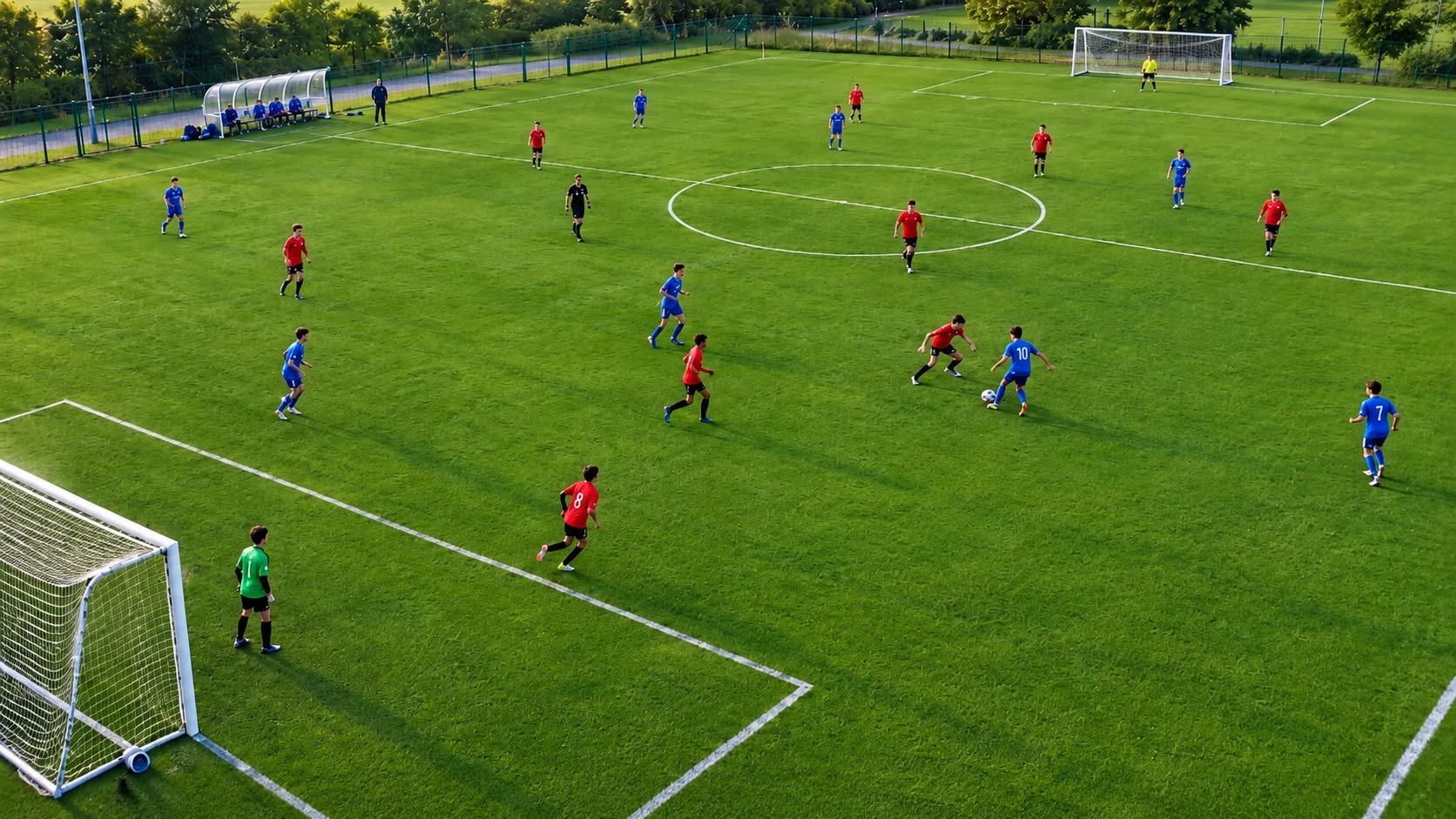
A lot of youth coaches inherit an 11v11 formation habit and try to shrink it down for a 9v9 game without really thinking it through. It doesn't quite work that way. Fewer players change what's actually needed on the pitch, not just the numbers in the formation name.
Most leagues in the US, UK, and elsewhere run 9v9 for the U11 to U12 age range as a bridge between smaller formats like 7v7 and full 11v11. If your team's about to make that jump, or you're coaching in this format already and want a better structure than "everyone chases the ball," this is the practical rundown.
Why 9v9 is its own thing, not mini 11v11
With two fewer outfield players and a smaller pitch, spacing changes completely. Formations built for 11 players assume more bodies to cover width and depth at the same time. In 9v9, you generally can't do both fully, so most successful shapes make a deliberate trade-off, either prioritizing defensive solidity or attacking width, rather than trying to cover everything at once the way an 11-a-side team can.
This is also usually the first format where players start holding more defined positions rather than everyone crowding the ball, so the formation matters more for actual player development at this stage, not just results. U.S. Soccer's own explainer covers why the format exists in the first place if you want the full background.
The most common 9v9 formations
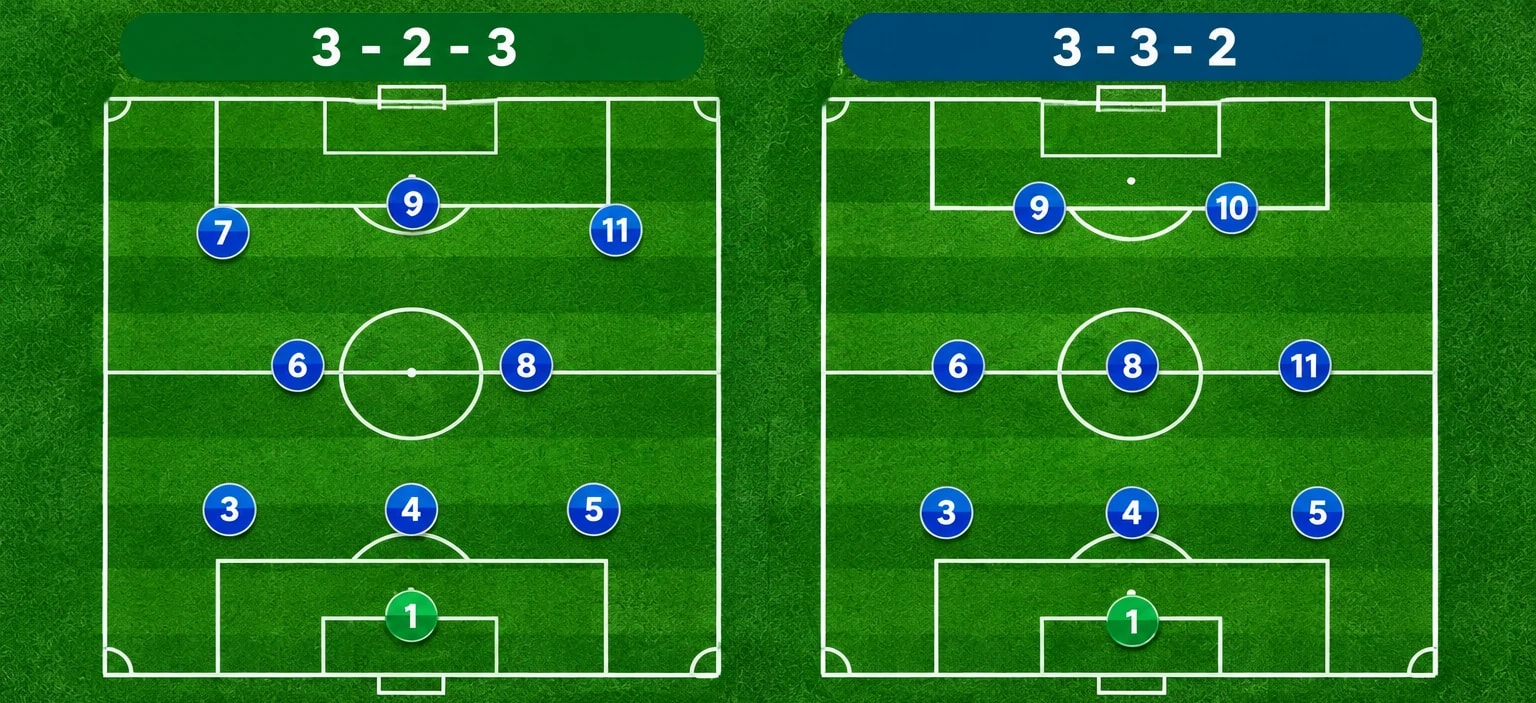
3-2-3. Three defenders, two central midfielders, three forwards spread across the front. Good balance of defensive cover and attacking width, one of the most commonly used shapes at this level because it gives every player a fairly clear role without asking too much positionally.
3-3-2. Three defenders, three midfielders, two forwards. Slightly more conservative than 3-2-3, with an extra body in midfield for better control of possession, at the cost of a bit less width up front.
2-3-3. Two defenders, three midfielders, three forwards. More attacking-minded, works well for teams with strong ball-playing center backs and a midfield comfortable dropping to help defensively when possession is lost.
1-2-3-2 or similar variations. Some leagues and coaches like a single deepest defender (a sweeper-style role) with two more defenders ahead, giving extra defensive cover behind the last line. Works well for teams still developing individual defending, since it adds a safety net.
None of these are dramatically different from each other. The real decision points are how much defensive cover your back line needs and whether your midfield is strong enough to control the game with fewer numbers back. For how these ideas connect to full-sided shapes like the 4-3-3, see the dedicated formation guide once your players move up.
How to pick one for your squad
Look at your defenders first. If you've only got two or three players comfortable defending 1v1 confidently, lean toward a back three for extra cover. If you've got several solid defenders, two at the back frees up an extra attacking body.
Consider your midfield's ball control. A team that struggles to keep possession under pressure usually benefits from an extra midfielder (3-3-2) rather than committing more numbers forward.
Think about development, not just results. At this age, giving players clear, consistent roles that let them actually understand their job matters more than optimizing for the strongest possible shape on paper. A simpler formation coached well beats a complex one nobody fully understands.

Common mistakes coaches make at this level
Copying an 11v11 formation and just removing two players. A shrunk-down 4-4-2 isn't the same as a properly built 9v9 shape, the spacing and role balance doesn't translate directly.
Changing the formation every game based on the last result. Consistency helps players actually learn their roles. Switching shape constantly means nobody gets comfortable in any position.
Ignoring the extra space on a 9v9 pitch. The field is smaller than full size but still has meaningfully more space per player than 7v7. Players and coaches used to a tighter format sometimes forget to actually use the width available.
For a broader overview of how formations work across age groups, the soccer formations explained guide covers the full progression from small-sided to 11v11.
The short version
9v9 formations need their own logic, not a scaled-down version of 11-a-side thinking. 3-2-3 and 3-3-2 cover most teams well, pick based on how much defensive cover your back line needs versus how much you want to commit forward, and prioritize giving players roles they can actually understand and grow into over chasing the most complex shape available.